Baby Massage Before Bed: What It Does and What It Doesn't
Baby massage before bed is a pleasant, low-cost, low-risk part of a wind-down routine — and it is not a sleep fix. The honest summary of the research is that benefits look modest and the studies are mostly small and imperfect, which is a long way from “this will get your baby to sleep through.” What a few minutes of calm, predictable touch genuinely offers is a repeatable cue that the day is ending, some unhurried contact at a point in the evening when everyone is fraying, and a job the non-feeding parent can own completely. That’s worth having. It just isn’t a lever.
I’m writing this from the pregnant side, which is the only side I cover — and which happens to be the best time to learn it.
What the evidence actually says
The most-cited synthesis is the Cochrane review of massage for promoting mental and physical health in infants under six months. It pulled together 34 randomized trials — and reported that a large share of them had significant problems with how they were designed and carried out. The findings it did report were limited: some statistically significant results across a scatter of physical and developmental measures, including 24-hour sleep duration, in a literature the reviewers themselves treat cautiously.
That is a genuinely useful thing to know before you’re standing over a changing table at 7pm wondering why the magic isn’t working. “Might help a bit, hard to measure, very unlikely to hurt” is the accurate headline, and it’s a perfectly good reason to do something that also happens to be nice.
What I’d be wary of is the stronger version of the claim you’ll meet in baby-class marketing — that massage regulates a newborn’s sleep, resets their body clock, or fixes night waking. Newborn sleep in the early weeks is driven by feeding, tiny stomachs and an immature day-night rhythm, none of which a back rub outranks.
What it actually does well
It’s a cue, and cues are the real mechanism. The value of most bedtime routines is predictability: the same short sequence in the same order tells a baby what comes next long before they understand any of it. Massage is a good candidate for that sequence because it’s slow, it’s hands-on, and it can’t be rushed. Betteroo’s guide to using massage as part of a bedtime wind-down frames it that way too — roughly ten minutes, in a fixed slot, as one component of a routine rather than the routine itself.
It gives the other parent something real. This is the argument I find most persuasive, and it’s the reason it’s on my list this time. In the early weeks a lot of the caregiving funnels through whoever is feeding. A short massage before the bath, owned entirely by the other adult, is a genuine part of the evening that doesn’t require them to negotiate for it.
It’s ten minutes of not doing anything else. Not nothing, at a stage of life when the alternative is scrolling one-handed.
What it doesn’t do
- It doesn’t replace safe sleep. Everything about how a baby is put down still follows the AAP’s safe sleep guidance — alone, on the back, in a bare crib or bassinet, on a firm flat surface. A relaxed baby goes down exactly the same way a keyed-up one does.
- It doesn’t treat anything. You’ll see it recommended for gas, for reflux, for teething, for colic. Anything that looks like a medical problem is a pediatrician question, and this is not a treatment. Comfort and treatment are different categories and it’s worth keeping them apart in your head now, before you’re tired.
- It won’t fix a feeding-driven night. A newborn waking at two-hour intervals is doing the thing newborns do. No wind-down routine overrides hunger.
- It doesn’t have to happen. Some babies dislike being handled undressed, especially in the early weeks. A baby who squirms, stiffens or cries through it is telling you something, and the correct response is to stop and try again in a few weeks — not to persist because it’s supposed to be soothing.
About oil — one paragraph, deliberately
You’ll be sold a lot here. I’m not going to recommend any of it, and this site doesn’t do product lists in this category at all. If you want a medium, use a plain, unscented oil your pediatrician is happy with, and ask them before you use anything on newborn skin rather than after. Scented and essential oils are a firm no from me for a newborn. That’s the whole paragraph; anyone giving you a longer one is selling something.
What to do about this while you’re still pregnant
Here’s the part that’s actually mine. Massage is one of the few newborn skills you can genuinely learn in advance, and doing it now costs you nothing but an evening.
Find a class or a demonstration and watch it once. Many hospitals, birth centers and public-health programs run infant-massage sessions, some of them free, and plenty have waiting lists. Booking one while pregnant is far easier than booking one while postpartum. Watching it done — the pressure, the pace, the order — conveys more in ten minutes than any written description.
Decide where it sits in the routine. Before the bath or after? Before the last feed or after? You don’t need to be right; you need to have decided, because the whole benefit is that the order stays the same. This belongs in the same planning pass as setting up newborn sleep before the baby comes.
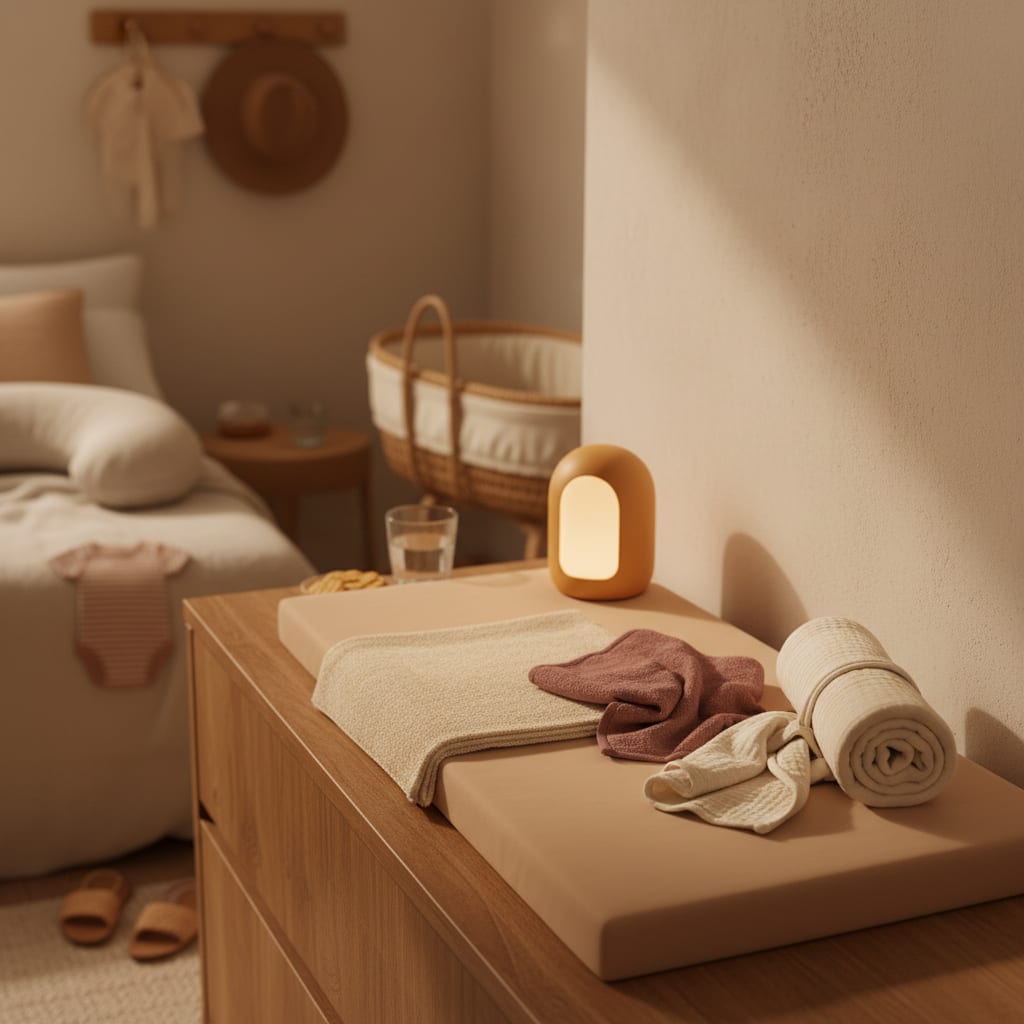
Sort the room now. Massage means an undressed baby, so the room needs to be warm enough and the surface needs to be safe, flat and never left unattended. If you’re already building the sleep space, work out where this will physically happen at the same time.
Agree who owns it. Have the conversation while you’re both still capable of a conversation. Assigning one adult the wind-down slot before the birth is worth more than any technique.
Set your expectations to “nice,” not “effective.” If you go in expecting a sleep result, you’ll drop it in week three when it doesn’t deliver one. If you go in expecting ten quiet minutes with your baby, it delivers every single time.
For the wider question of how the evening actually behaves once the baby’s here — the wind-down, the settling, the small noises that come with it — I’ve written about the pre-sleep chatter, which is the other thing nobody warns you about.

The honest place for a wind-down ritual is inside a wider plan for the nights, not instead of one — which is the gap a structured sleep program is built to fill. A tool, not magic, as ever.
FAQ: baby massage and bedtime
Does baby massage really help babies sleep?
The evidence is modest and the studies are mixed. The Cochrane review found limited significant results across a set of outcomes including 24-hour sleep duration, in trials the reviewers describe as often poorly conducted. Treat it as a pleasant part of a bedtime routine that might help a little, not as a sleep intervention.
When can you start massaging a newborn?
Gentle, light-pressure massage is generally described as fine in the early weeks, but this is exactly the kind of thing to confirm with your own pediatrician first — particularly if your baby arrives early, is small, or has any medical concerns. Ask at one of the early visits you’re already attending.
How long should a baby massage be?
Short. Around ten minutes is the figure most routines use, and less is fine. A baby who’s had enough will tell you clearly, and stopping early is never the wrong call.
Can I learn baby massage before the baby is born?
Yes, and it’s one of the better uses of a pregnant evening. Watch a class or a demonstration, decide where it fits in your evening routine, and sort out the warm, safe surface it’ll happen on. The technique takes minutes to learn; the decisions around it are what you won’t have bandwidth for later.