Set Up Newborn Sleep Before the Baby Comes
The best way to prepare for newborn sleep is to do it before birth, while you still have two free hands and a functioning prefrontal cortex: set up a safe, boring sleep space by AAP rules, calibrate your expectations to how newborns actually sleep (short stretches, around the clock, no schedule), agree on a night-shift plan with your partner, and line up your tools — the white-noise machine, the swaddles, and a plan you’re not inventing at 3am. Newborn sleep can’t be scheduled in advance. Everything around it can, and that’s the difference between hard and chaos.
I did zero of this before my first. I am doing all of it before this one. Learn from the gap.
Why this is a third-trimester job, not a week-one job
Here’s what nobody explains about the newborn weeks: the problem isn’t just that you’re tired — it’s that you’re tired while making decisions. Where should she nap? Is this swaddle right? Why is 4pm cursed? Every question lands on a brain running on ninety-minute sleep fragments.
Sleep prep is decision prep. Each choice you make now — the space, the plan, the tools, the pediatrician who’ll answer the weird questions — is one fewer decision made at 3am by committee between two people who love each other slightly less than they did at 2am. And the third trimester is weirdly ideal for it: you’re home more and moving less anyway, and it’s all sitting-down work.
Step 1: the space (the AAP-rules part)
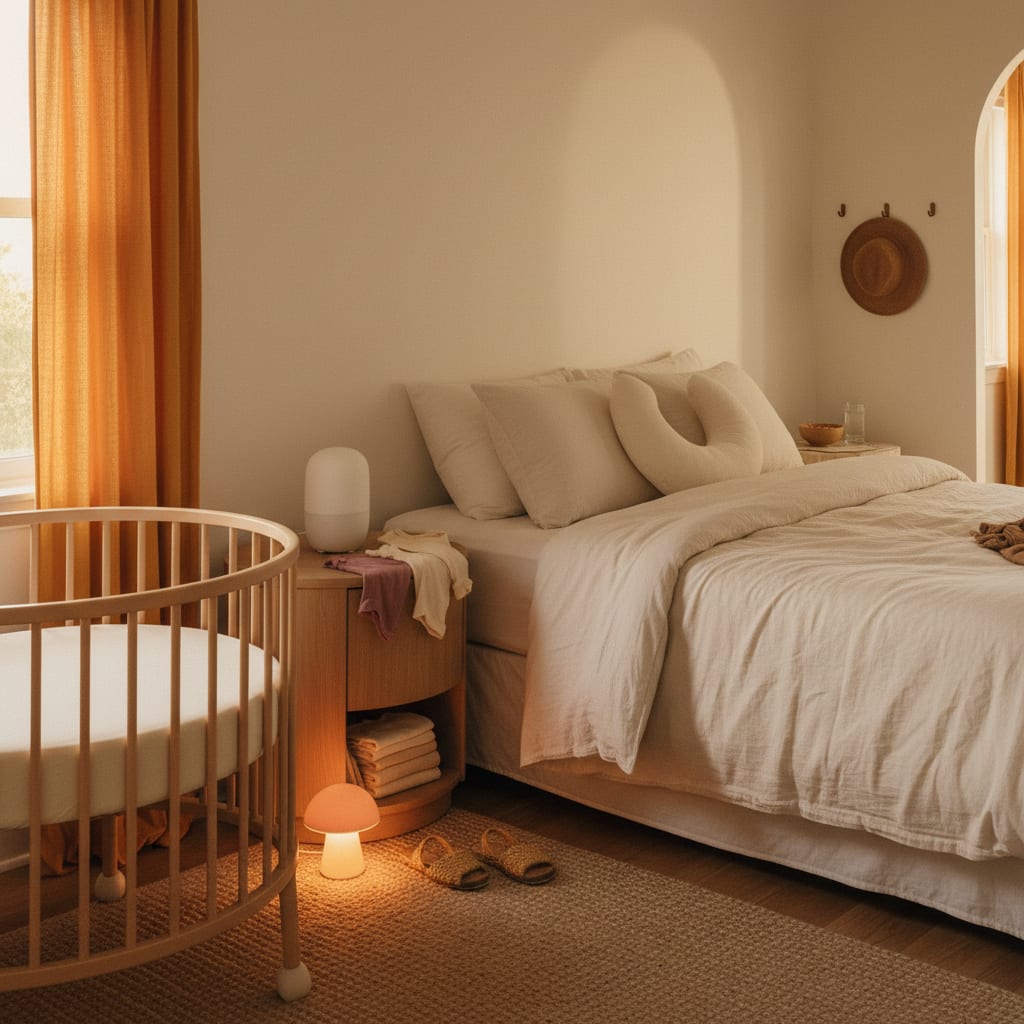
The safe-sleep basics come from the American Academy of Pediatrics (AAP safe sleep guidance), and they are blessedly simple: baby sleeps alone, on their back, on a firm flat surface, in a bare bassinet or crib — no blankets, pillows, bumpers, or adorable clutter — ideally in your room for the early months. That’s the spec. Everything else is decor.
Setting this up properly is its own small project — placement, darkness, the 3am walking route — and I’ve broken it out into a step-by-step sleep space setup. Do it by week 36-ish, not because the baby cares, but because you will never again have this kind of project energy.
Step 2: expectations (the sanity part)
Newborns sleep a lot — commonly cited ranges run around 14 to 17 hours a day — in fragments of roughly 2 to 4 hours, distributed with total indifference to the sun. They wake to eat around the clock because their stomachs are tiny. Day-night confusion is standard-issue. None of this is a problem to fix; for the first stretch it’s just what the machine does.
Why does this belong in prep? Because the parents who crash hardest aren’t the ones who slept least — they’re the ones who expected a schedule. Walk in expecting fragments, and the fragments are survivable. Walk in expecting nights, and week two feels like betrayal. Calibrate now, while you’re rested enough to absorb it.
Step 3: the night-shift plan (the marriage part)
Have this conversation on the couch in month eight, not in the dark in week two: who’s on when? How do feeding logistics shape it? Where does the off-duty person sleep, and is that actually okay? What’s the “everyone’s drowning, who do we call” list — and while you’re listing helpers, note that grandparents may need a friendly briefing, since safe-sleep rules have changed a lot since we were the babies.
Write the plan down. It will not survive contact with your actual baby — no plan does — but couples with a plan renegotiate from a draft; couples without one renegotiate from scratch, at 3am, forever.
Step 4: the tools (the shopping-lite part)
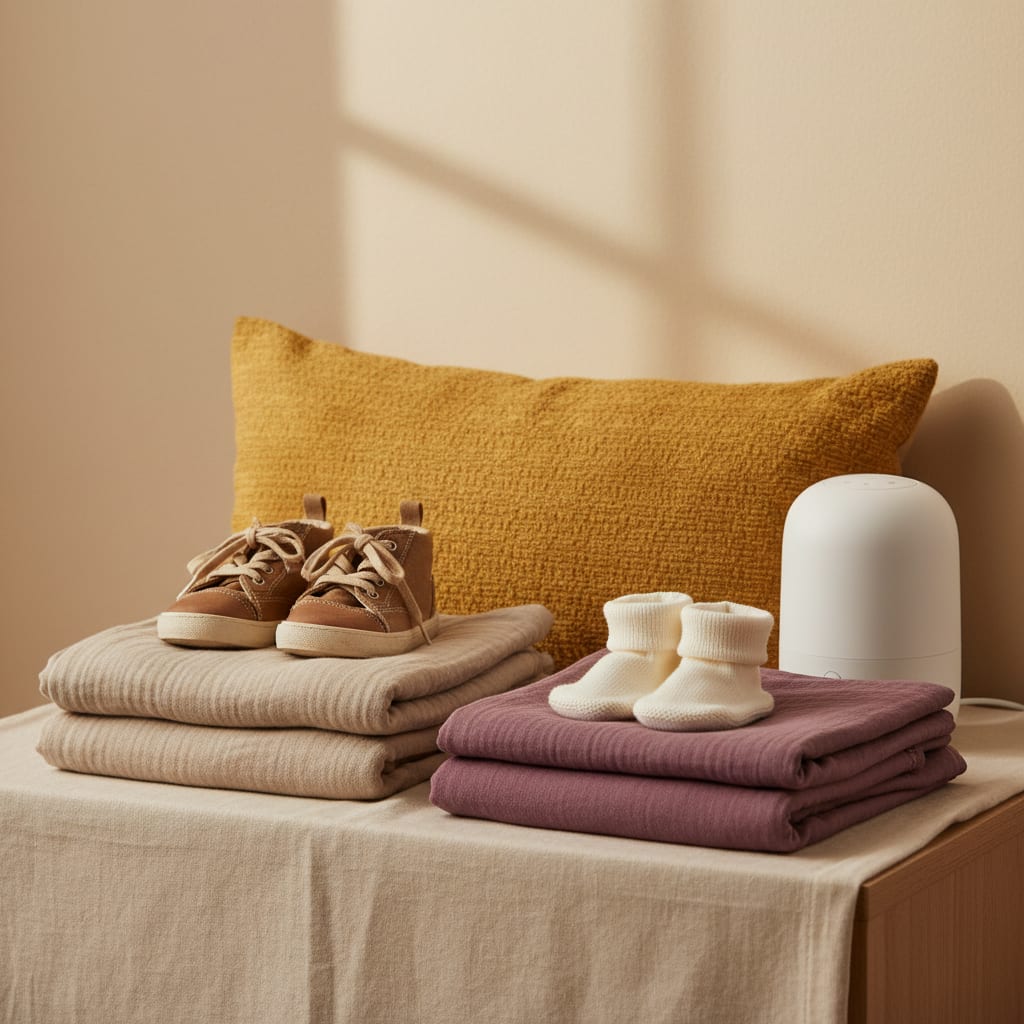
Newborn sleep needs less gear than the registry-industrial complex suggests. The set that earns its shelf: a safe bassinet (covered in the sleep space post), a few swaddles or sleep sacks like the HALO SleepSack, blackout-ish curtains like NICETOWN blackout panels, a dim night-light for feeds, and a white-noise machine — the one item I’d buy twice. Steady sound smooths the transition from the loud womb and blurs the household noise that pops naps. The canonical example is the Yogasleep Dohm Classic — an actual little fan in a shell, the same design since the 1960s, no app, no subscription, survives being knocked off the dresser. Set it up now and it’s one more thing future-you doesn’t think about.
And then there’s the planning tool. You can’t schedule a newborn — but once the baby’s here, the daily questions (is this nap normal? when’s bedtime tonight? what changes at six weeks?) arrive relentlessly, and this is where I’ll name the thing I actually plan to lean on: Betteroo, a personalized sleep program — you answer a quiz about your baby and your parenting style, and it builds a day-by-day sleep plan that keeps adjusting as the baby changes. The honest version: it’s a tool, not magic — it won’t feed anyone at 3am, and it costs around $20 a month, which you should decide about with open eyes. But it’s exactly the kind of decision-support the fog eats, and taking the quiz before the baby comes — while you still have both hands free — means the plan is loaded before night one. That’s very much the theme of this post.

What you genuinely cannot prep (and who takes over)
Full disclosure of the limits: you can’t pre-solve cluster feeding, the 4pm witching hour, or which soothing move your particular baby will accept — that data arrives with the baby. What prep buys you is a lower-stakes learning curve: safe space, sane expectations, a plan to amend, tools on the shelf.
For the other side of the doors — what those first newborn weeks are actually like and how to survive them in real time — the handoff is Tales of a New Mom’s newborn sleep survival guide. She covers the after; I’m strictly the before. It’s a good relay.
FAQ: preparing for newborn sleep
When should I set up the nursery or sleep space?
Aim for roughly weeks 32 to 36 — late enough that it’s real, early enough that you’re not assembling a bassinet with a due date breathing on you. The baby needs the bassinet on night one and won’t care about anything else for months.
Should the baby sleep in our room?
The AAP recommends room-sharing (baby’s own separate sleep surface, in your room) for at least the first six months — it’s associated with lower sleep-related risks and makes night feeds shorter. Own-room timing beyond that is a preferences-and-pediatrician conversation.
Can you really sleep train a newborn?
No — formal sleep training isn’t a newborn-stage thing, and anyone selling you a guaranteed newborn schedule is selling weather control. The newborn move is rhythm, not rules: full feeds, light days and dark nights, and flexible planning. Structure comes later, gradually.
What’s actually worth buying for newborn sleep?
Safe bassinet, a few swaddles or sleep sacks, blackout curtains, dim night-light, white-noise machine. That’s the list. Most sleep gear beyond it is solving problems you don’t have yet — wait and buy the specific solution when the specific problem introduces itself.