Baby Cooing and the Pre-Sleep Chatter: What to Expect

Before your baby says anything, they will make noise at you — and a lot of it happens in the wind-down before sleep. The rough shape, per the CDC’s milestone checklists: sounds other than crying by around two months, vowel-ish cooing (“oooo,” “aahh”) and sounds returned to you when you talk by around four months, squeals by six, and long strings like “bababababa” by around nine. Those are ranges observed across many babies, not deadlines your baby is being marked against. The pre-sleep chatter — a baby narrating quietly in the bassinet before dropping off — is a very common and usually unremarkable part of settling.
I’m writing this from the pregnant side, which is exactly when nobody explains it to you.
Why I’m writing about this before the baby’s here
Because the first time, the sounds surprised me twice. First when they started — I’d braced for crying and got a small conversationalist. And second at bedtime, when our daughter would lie in the dark going aaah-goo, aaah-goo for eleven minutes, and I’d stand outside the door doing frantic maths about whether I was supposed to go in.
Nobody had told me that was normal. It’s the kind of thing that’s obvious once you’ve seen it and terrifying at 8pm on night forty. So: consider yourself told, months ahead of schedule.
The rough sequence, with ranges rather than dates
The CDC’s Learn the Signs. Act Early. milestone checklists give the plainest version, and they’re worth reading in full rather than in summary:
- Around 2 months: makes sounds other than crying.
- Around 4 months: makes cooing sounds like “oooo” and “aahh,” and makes sounds back when you talk to them.
- Around 6 months: makes squealing noises; blows raspberries.
- Around 9 months: makes a lot of different sounds, like “mamamama” and “bababababa.”
The American Speech-Language-Hearing Association (ASHA) frames it in bands rather than points — cooing in the four-to-six-month band, long babbled strings in the seven-to-nine-month band — and says plainly that children develop at their own rate, including within the same family. Both are describing the same arc with different resolution. Neither is a schedule your baby signed.
What that means practically: a blog post cannot tell you whether your baby is on track, and this one is not trying to. Milestone checklists are conversation-starters for well-child visits, not tests. If you’re comparing something you’ve read here with something your baby is or isn’t doing, the next step is your pediatrician — not another article. Choosing that pediatrician before birth is genuinely one of the more useful things you can do while you’re still pregnant, precisely so that the first “is this normal?” question has somewhere to go.
The pre-sleep chatter specifically
Here’s the part that surprised me most, and the reason this post exists.
Somewhere in the early months, a lot of babies start doing a wind-down monologue — a few minutes of soft vowels, grumbles, squeaks and sighs after they’re put down and before they’re actually asleep. It sounds social. It often isn’t; it’s frequently just what settling sounds like out loud. Sound-making is practice, and babies practice while they’re relaxed, which describes the pre-sleep window fairly well. Betteroo’s guide on when babies start cooing is a good, plain-language read on the arc — and the strings of repeated syllables that come later are the same instinct with more consonants.
The practical question a new parent actually has is: do I go in? Contented chatter and distress usually sound different, and you learn the difference faster than you expect — which still means a couple of weeks in a hallway feeling stupid. The useful move is agreeing in advance with your partner roughly what you’ll do, so you’re not litigating it at 8pm in whispers.
What this changes about the setup you’re building now
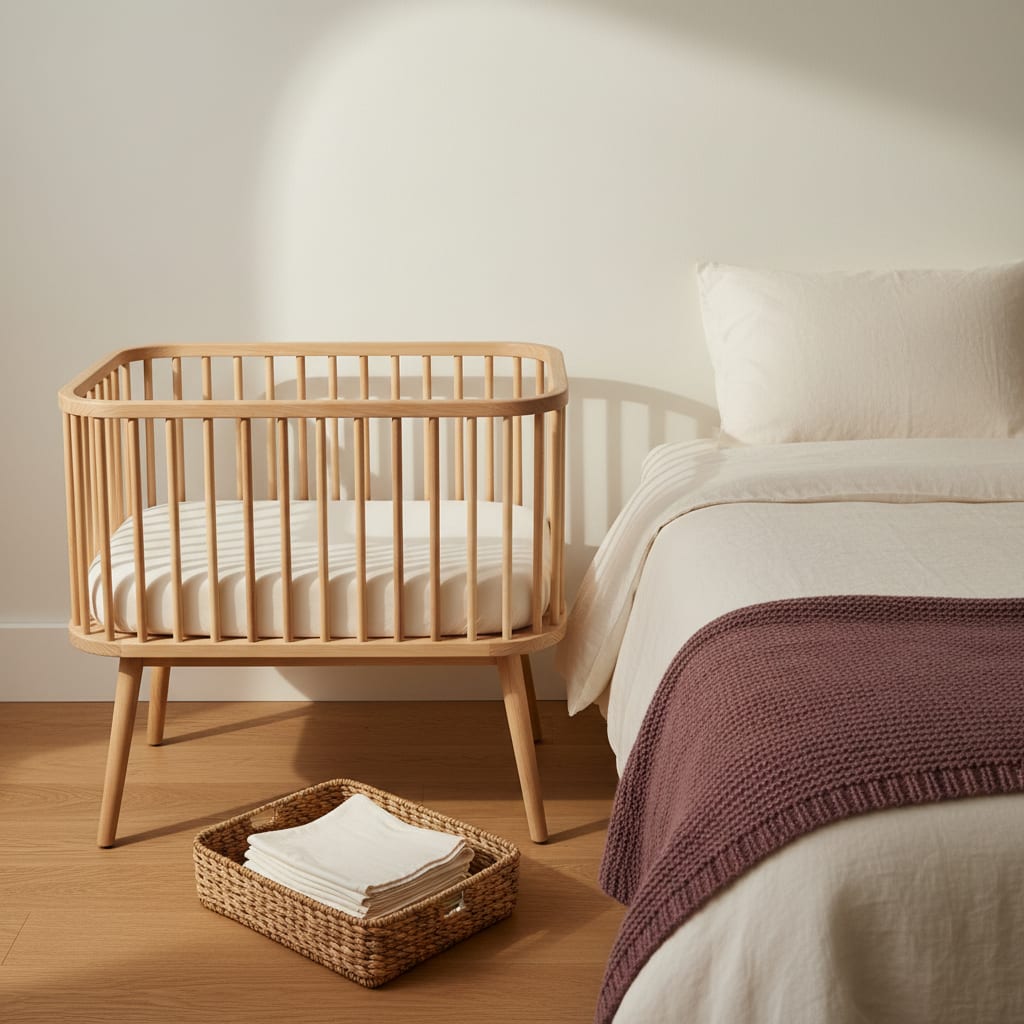
Two small things, if you’re currently assembling the newborn sleep space:
Your monitor’s job includes hearing the quiet stuff. Chatter is much softer than crying. If you’re choosing a monitor, being able to hear low-volume sound clearly matters more than most of the features on the box.
White noise doesn’t have to be the enemy of hearing them. Steady background sound at a sensible volume — across the room, not in the bassinet — smooths the transition from the very loud womb without blanketing everything. The canonical worked example is still the Yogasleep Dohm Classic, a mechanical fan in a shell with nothing to update. Set it up before the baby comes and listen to the room from where the monitor will sit — that’s a five-minute test you can run this month and never think about again.
Both of those belong in the wider before-birth project I’ve written up in setting up newborn sleep before the baby comes: space, expectations, night-shift plan, tools. The chatter is a small, delightful item in the “expectations” column.

The things worth knowing now, so you’re not reading them at 2am
- Talking back is the whole intervention. Pause after their sound, then answer. The turn-taking is what CDC’s four-month milestone is describing — sounds back when you talk to them.
- Hearing is part of speech. Newborn hearing screening is standard in US hospitals; know whether your baby had it and what the result was, because it’s the first question anyone will ask later.
- Quiet babies exist and noisy babies exist. Volume of output at three months is not a forecast.
- Second babies aren’t guaranteed to follow the first. Ours will do their own thing on their own timeline, which is the recurring theme of second time around generally.
When to raise it with the pediatrician
Not “when to worry” — when to ask, which is a lower bar and the right one. Bring it up at any well-child visit if your baby isn’t making sounds other than crying by around two months, isn’t cooing or responding to your voice with sound by around four to six months, isn’t babbling strings of syllables by around nine months, doesn’t respond to sound or to their name, seems to lose a skill they previously had, or if anything about their hearing or communication is nagging at you. “It’s probably nothing” is a completely valid reason to ask.
Concerns don’t have to go through the pediatrician alone, either: CDC’s early intervention programs exist in every US state and territory, families can often self-refer, and services are free or reduced-cost for eligible children. Acting early is the whole design of that system — you never need a diagnosis in hand to make a phone call.
FAQ: cooing, babbling and pre-sleep chatter
When do babies start cooing?
CDC’s checklist puts cooing sounds — “oooo,” “aahh” — at around four months, with sounds other than crying appearing by around two months; ASHA describes cooing across roughly the four-to-six-month band. Those are ranges across many babies, and individual timing varies a lot.
Is it normal for a baby to babble before falling asleep?
Talking themselves down is very common and usually just what settling sounds like. Contented chatter and genuine distress tend to sound different, and most parents learn the difference within a couple of weeks. Anything that sounds like distress, or any breathing that concerns you, is a call to your pediatrician rather than a wait-and-see.
What’s the difference between cooing and babbling?
Cooing is the earlier, vowel-heavy sound — long, open, musical. Babbling comes later and adds consonants, often in repeated strings like “bababa” or “mamama.” Cooing is the raw material; babbling is the raw material with structure.
Should I be tracking milestones while I’m still pregnant?
No — and I’d gently suggest not starting. Reading the ranges once, so nothing blindsides you, is useful. Building a tracking habit before the baby exists is a great way to turn a delightful stage into a performance review. Save the checklists for the well-child visits they were designed for.