When to Take Maternity Photos: The Weeks That Work
Most maternity photos are taken somewhere between 28 and 36 weeks, and the range photographers name most often is 30 to 34: late enough that the bump reads clearly in a picture, early enough that you can still walk to a location and stand up for an hour without wanting to lie down. Go earlier for twins, where 26 to 32 is the usual advice, and earlier again if this is round two and you popped early. Book the date months before you need it. Everything after that is logistics, and the logistics are what make or break the morning.
The window photographers actually book
Working photographers publish remarkably similar advice. Lauren Dobish’s maternity session guidance is typical: 28 to 34 weeks as the sweet spot, 26 to 32 for twins and multiples because those pregnancies tend to arrive earlier and get uncomfortable sooner, and 28 to 32 for second and third babies, who “pop earlier,” against 30 to 34 for first-timers.
The reasoning behind the window is what lets you adjust it for yourself:
- Too early and the bump doesn’t photograph. A camera flattens. What’s unmistakable in your bathroom mirror at 24 weeks can read as an ordinary silhouette from six feet away.
- Too late and you’re miserable in the frame. By 37 or 38 weeks, standing for a session is genuinely hard, your feet have opinions, and the baby may beat the appointment.
- The middle is a compromise, not a rule. If you’re showing enormously at 27 weeks, go at 27 weeks.
What moves your date earlier
Four things pull the window forward, and three of them apply to a lot of people:
This isn’t your first. Second pregnancies commonly show earlier — previously stretched abdominal muscles put up less of a fight — which means the photogenic bump arrives ahead of schedule and so can the shoot. My own version of this was a month’s difference, which surprised nobody but me.
Twins or multiples. Photographers routinely move these forward to 26 to 32 weeks. Take their word for it.
You’ve been told to expect an early delivery. If a planned induction, a scheduled cesarean or anything in your history has moved your likely date, move the shoot with it — and ask your OB or midwife what they’d suggest rather than guessing.
Your job is physical. If you’re already at the end of your rope by 4pm, don’t book a 32-week session and hope. Earlier and comfortable beats later and rounder.
Book it at the scan, not at 30 weeks
The single most common mistake is treating this as a third-trimester task. Photographers book out months in advance, and the slots people want — the hour before sunset, weekends in spring and autumn — go first. Enquire around the end of the first trimester or after the 20-week scan, hold a date, and adjust it later if you need to. Almost every photographer would rather move you by a fortnight than fit you in from scratch at 33 weeks.
If you’re organising anything else around the same period — leave paperwork, a hospital tour, the pediatrician conversation — put the shoot on the same list. It’s a calendar item, not a project, and it’s the only one on that list with a deadline set by somebody else’s diary.
Indoor or outdoor, by season
Season decides more than style here, because a bump at 32 weeks does not tolerate weather.
Summer. Outdoors, but only at the ends of the day — the hour after sunrise or the hour before sunset. Midday sun is unflattering and genuinely unpleasant when you’re this pregnant; heat and swelling are the whole reason staying functional in summer takes planning. Bring more water than you think, and pick a location with shade and a bathroom.
Winter. Indoors by default, or a very short outdoor block with a coat on between frames. Daylight ends absurdly early, so a weekend slot in the middle of the day may be your only outdoor option. A window-lit room at home photographs better than most people expect.
Spring and autumn. The easy ones, which is exactly why they book out first. If your window lands here, hold a date early.
Dressing a bump for a camera
Style direction isn’t my department — Modern Mommy Blog does outfits properly, and her family photo outfit rules transfer straight across. What I’ll offer is the logistics half, which is what people actually get wrong:
- Fitted or genuinely flowing, nothing in between. The shapes that photograph as “pregnant” are the ones that follow the bump or move freely around it. Mid-weight, semi-loose clothing reads as clothing.
- Try it on standing up, a week before. Not the night before. Things fit differently at 32 weeks than they did when you bought them at 26, and this is precisely the phase where nothing fits the way it did.
- Borrow rather than buy. Photographers often keep a client wardrobe; friends have a bin in the loft. A dress worn once for an hour is not a purchase decision.
- Shoes you can walk in to the location. You will cross grass. Bring the nice ones in a bag if you want them for three frames.
Shoot-day comfort, which nobody plans for
A session runs roughly an hour, most of it standing. Eat properly beforehand, take water and a snack, and find the nearest bathroom before you start rather than at minute forty.
Tell your photographer what you can’t do — any decent one will work around it. That includes poses on the floor: ACOG’s take on back-sleeping in pregnancy is reassuring for short periods, but if lying flat makes you dizzy or breathless, say so immediately and roll onto your side. That’s a sentence, not a scene. The rest of the third-trimester comfort kit applies to the two hours around a shoot as much as to a Tuesday evening.
Round two, and the “we never got round to it” version
Here’s the honest bit. Plenty of second-time parents never book anything, because the first pregnancy got a professional session and this one gets whatever’s left of a Saturday. That regret is common and completely avoidable, and it does not require a photographer.
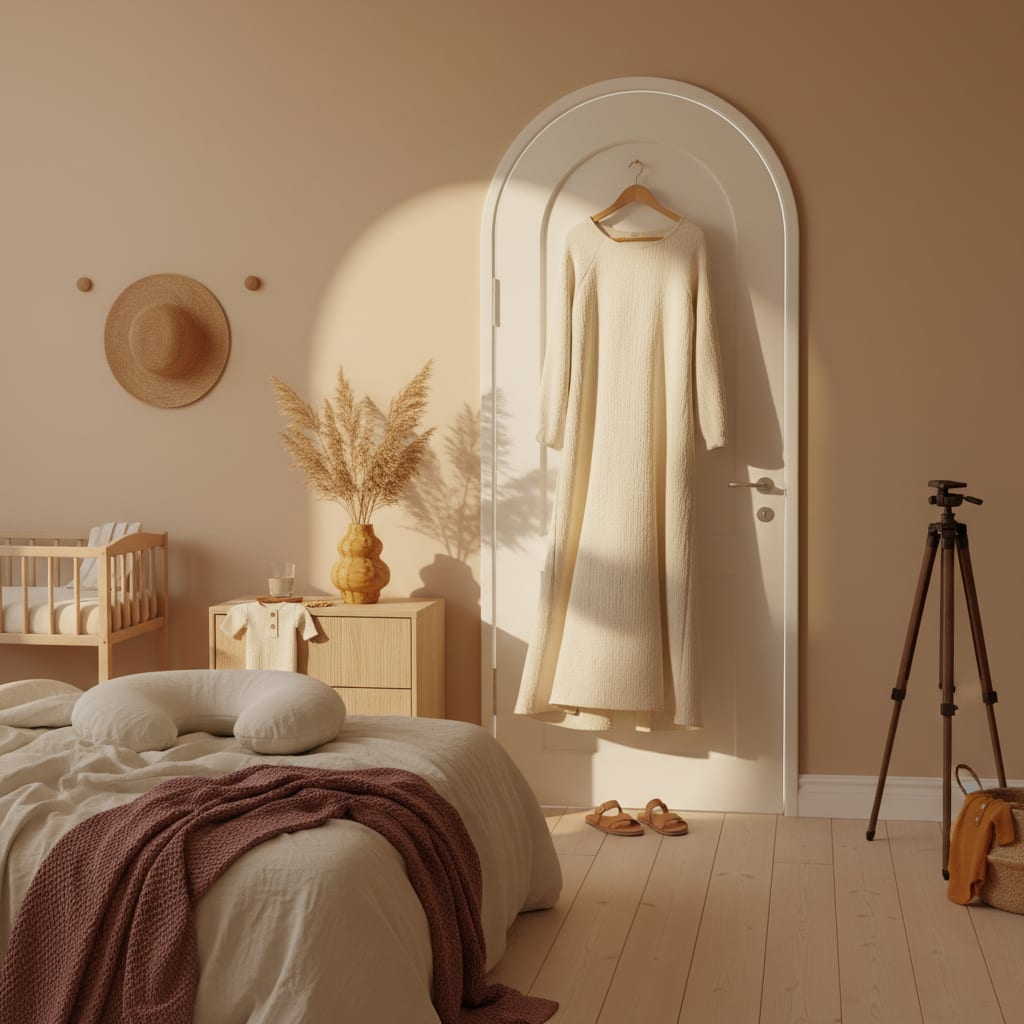
The twenty-minute version: one evening, one wall or one doorway with decent light, a phone on a timer or propped on a shelf, and your toddler in half the frames because they will not be talked out of it. Take more than you think you need and delete later. The photograph people treasure ten years on is almost never the polished one — it’s the one with the two-year-old refusing to look up.
Check with your OB or midwife if…
Timing questions belong to whoever is looking after this pregnancy: if you’ve been advised to expect an early arrival, if you’re carrying multiples, or if travel to a location is a question, ask them before you book. Separately, and regardless of what’s in the diary: bleeding, fluid leaking or a gush, contractions before term, severe headache or vision changes, sudden swelling of the face or hands, fever, severe or one-sided abdominal pain, a fall, dizziness or fainting, or a decrease or change in your baby’s movement pattern all mean call the same day. A photo session is never the reason to wait.
FAQ: timing a maternity shoot
What is the best week to take maternity photos?
Somewhere between 30 and 34 weeks for most first pregnancies, with the wider practical window running from about 28 to 36. Earlier if you’re carrying twins or showing a lot; earlier again if standing for an hour is already hard.
Is 36 weeks too late for maternity photos?
Not automatically, but it’s the outer edge. You’ll be less comfortable, and there’s a genuine chance of an early arrival. If 36 is your only option, book it — a late session beats no session.
When should I book a maternity photographer?
Around the end of the first trimester, or right after the 20-week scan. Photographers commonly book two to three months ahead, and the golden-hour and weekend slots go first. Holding a date early costs nothing and can be moved.
Do you need a professional photographer for maternity photos?
No. A phone, decent evening light and a timer produce something you’ll be glad of. The professional version buys you skill, lighting and someone else directing — worth it if it’s in the budget, not a requirement for having the pictures at all.