When Nothing Fits: The Cheap Way Through Maternity Sizing
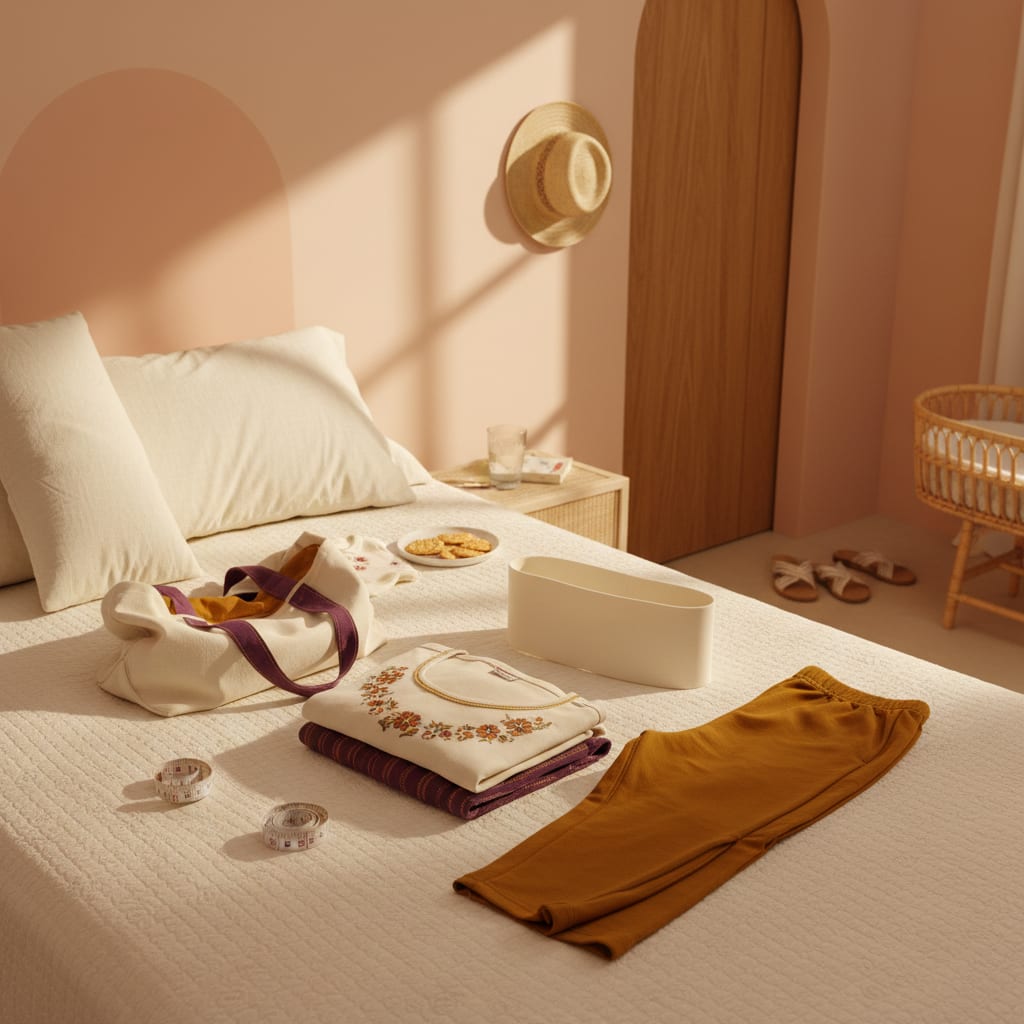
Most people hit the nothing-fits wall well before they need actual maternity clothes, and the cheap way through is staged: extend what you own first (a hair-tie loop or a belly band through the buttonhole), then buy only the two or three items you wear most days, then — usually somewhere in the second trimester — buy properly for the shape you’ll be at the end, not the shape you are now. Buy for the season you’ll be huge in, size the bust before the bump, and resist the urge to replace a wardrobe you’ll wear for four months.
Here’s the staged version, with the money in the right places.
Stage one: extend what you already own (weeks 8–16-ish)
The button goes long before the outfit does. So don’t replace the outfit.
- The hair-tie trick. Loop an elastic through the buttonhole and back over the button. Costs nothing, buys weeks, and is invisible under anything untucked.
- A belly band over unbuttoned trousers. A wide stretchy tube worn over the waistband, holding your jeans up and covering the gap. The Ingrid & Isabel Bellaband is the canonical worked example — it’s the item most people mean when they say “belly band,” and a two-pack in black covers essentially everything. The cheap knock-offs work too, with one caveat: the thin ones roll, and a band that rolls at 2pm is worse than an unbuttoned button.
- Your partner’s shirts, cardigans, anything with a drape. Not a style tip — a coverage tip. The stage-one problem is a waistband, and a longer top solves the waistband.
- The stretchiest things you own get promoted to everyday rotation. Ponte, jersey, anything with elastane.
Stage one is where people waste the most money, because the wall feels dramatic and the shops are right there. Don’t. Nothing you buy now will fit you in three months.
When to actually start buying
The usual answer is “when stage one stops working” — which for most people lands somewhere in the middle of the second trimester, though the honest range is wide and depends on your build, your job’s dress code, and which pregnancy this is. When you start showing is genuinely variable, and second pregnancies often show earlier — this round I was in a belly band a solid month sooner than the first time, which was more amusing than distressing but did move my whole shopping calendar forward.
Two rules make the first real purchase efficient:
Buy for the end, not the middle. Maternity sizing generally assumes the bump — good pieces have panels and stretch designed for later. Something that fits perfectly at week 20 may be tight at 30. Buy the piece that looks slightly roomy now.
Buy for the season you’ll be biggest in. This is the one people miss, and it’s the expensive one. If you’re due in January, your heaviest wearing happens in cold weather, so the money goes on warm layers and not the summer dress that fits beautifully today.
The short list that actually earns its money
You need fewer items than the internet suggests, because the reality of late pregnancy is that you rotate three things.
- One pair of trousers or jeans that fit properly. Over-bump or under-bump is genuinely personal — over-bump stays up, under-bump feels less like being upholstered. Buy the one you’ll actually wear, which means trying both if you can.
- Two or three tops long enough to cover. The key measurement is length, not size. Regular tops in a bigger size get shorter as you get wider; maternity tops are cut long specifically to stay put.
- One thing you feel good in. Whatever “good” means to you. There is a difference between the four months where you own one nice thing and the four months where you don’t, and it costs about the same as two takeaways.
- Bras, sized late. Ribcage and bust both change, often earlier than the bump — get measured rather than guessing, and expect to do it more than once.
- Comfortable shoes with room to swell. Feet get wider. If you’re on your feet for work, this is the least optional purchase on the list — the whole on-your-feet survival kit starts with shoes that fit today’s foot.
That’s the whole core wardrobe. Everything else is optional and mostly regretted.
Where to get it cheap without much effort
- Secondhand is unusually good here — maternity clothes are worn for a few months by definition, so the resale market is full of barely used pieces. Local buy-and-sell groups, resale apps, charity shops in nice neighborhoods.
- The lending economy is real. Ask the group chat. Someone has a bin in a loft and would be delighted to hand it over — that’s how a third of my first pregnancy wardrobe arrived, and I’ve since passed it on twice.
- Supermarket and value-retailer maternity lines are perfectly adequate for four months of hard wear.
- Buy one size up in ordinary clothes for the transitional weeks — jersey dresses, wrap styles, elastic-waist trousers — and keep them afterward, when maternity-specific pieces stop being useful but you’re not back in your old jeans yet.
One thing worth planning for: the fourth-trimester gap. Most people don’t come home in pre-pregnancy clothes, and the transitional pieces you buy now are exactly what you’ll wear then. That’s the argument for buying “roomy normal” over “very pregnant” wherever the choice exists.
What I’d skip entirely
Structured workwear you’ll wear a handful of times before leave. Anything dry-clean-only. Trousers you can’t sit down in comfortably, no matter how good they look standing. Specialist sleepwear you don’t need — a big old T-shirt and the comfort setup you already have does the job. And a whole second set of “just in case” sizes: your body will tell you, with plenty of notice.
FAQ: maternity sizing and when nothing fits
When should I buy maternity clothes?
Most people buy their first real maternity piece somewhere in the second trimester, once extending what they own stops being comfortable. There’s no rule and no medal — the trigger is your waistband, not the calendar.
What size maternity clothes should I buy?
Generally your pre-pregnancy size, because maternity cuts are designed to accommodate the bump. If you’re between sizes, or buying for the end of pregnancy, size up rather than down: too roomy is wearable, too tight is money spent on nothing.
Do I need a belly band, or is it just marketing?
It’s genuinely useful in exactly one phase — the weeks where your own trousers no longer button but maternity trousers still sag. That phase can last a couple of months, which makes it good value. If you sail past it quickly, you’ll have spent very little.
How much should I expect to spend?
Less than you fear, if you go secondhand and buy few. A realistic core is one pair of trousers, two or three long tops, bras that fit, and one thing you like. Everything beyond that is a want, and wants are fine — just buy them knowingly rather than in a panic at week 17.