Phone During Night Feeds: What 3am Scrolling Does to Sleep
Scrolling during a night feed rarely wrecks the feed. It wrecks the part after it. Light from the screen nudges your brain toward awake, and each “one more video” is time you aren’t spending asleep. The best evidence we have says the time matters more than what you’re looking at. So make the phone dull and far away, keep the room dim, and have something else ready for your eyes and hands. The harder truth: if you’re scrolling to stay awake because you might doze off on the sofa, the phone isn’t the problem. The sofa is.
Where this post stops
I’m pregnant with my second, and I scrolled through most of the night feeds the first time. This post covers the phone, your own sleep and the room you feed in. How to feed and settle the baby is Tales of a New Mom’s guide to surviving night feeds, and the two go well together.
Why the phone feels like the obvious move
Night feeds are long, dark and frequent. Betteroo’s week-by-week newborn feeding chart puts early feeds at “about 8 to 12 times in 24 hours”, so several land after midnight. You have one free hand and a brain too tired to think but too wired to switch off. The phone fills both gaps. It also keeps you awake, which is the whole appeal and the whole problem.
What scrolling actually does to falling back asleep
There are two ways a phone can cost you sleep after a feed, and the evidence for them is not equally strong.
The light. The standard advice is consistent. The NHS’s sleep tips page says “the blue light from screens can make it harder to fall asleep”, and its insomnia page warns against devices before bed “because the blue light makes you more awake”. It’s a reasonable precaution. But both pages are written about bedtime, not a twenty-minute feed at 3am, so I wouldn’t treat light as the whole story.
The time. This part has better evidence, and it’s less dramatic. A 2025 survey of 45,202 Norwegian university students, published in Frontiers in Psychiatry, found that each extra hour of screen use after going to bed “was associated with 59% higher odds of having symptoms of insomnia and a reduction in sleep duration of 24 minutes.” The researchers think screens mostly take up time that would otherwise go to sleep. What you were looking at made no difference: the association “did not differ for social media use versus other activities.”
The caveats, which the authors state themselves. The study is cross-sectional, so it “only demonstrates a relationship between screen time and sleep, and not causal effects”. The participants were students, not new mothers. And they cite another study that found no harm from screens before sleep, suggesting the real effect is “much smaller” than surveys like theirs show.
Even so, the time point is the useful one. A feed that should take twenty minutes and takes fifty because you kept scrolling has cost you thirty minutes. Switching from the news to a show won’t help. A shorter wake will.
The safety side: scrolling to stay awake
If you’re reaching for the phone because you can feel yourself nodding off, think about where you are first.
The NIH’s Safe to Sleep campaign says to “think about how tired you are before you start a feeding session”. Its breastfeeding and safe sleep page is blunt: “Avoid feeding baby on couches and armchairs.” Those surfaces “carry a very high risk” if an adult falls asleep there with a baby. The AAP’s parent guide to safe sleep says the risk of sleep-related infant death “is up to 67 times higher when infants sleep with someone on a couch, soft armchair or cushion.”
A phone doesn’t change that. It keeps you awake right up until it doesn’t. Here’s what the guidance suggests if you might fall asleep:
- Feed somewhere safer than the sofa. Clear the adult bed of pillows and blankets first, and put the baby back in their own crib or bassinet when the feed ends.
- Use a person or a timer, not a feed of videos. Safe to Sleep suggests having someone stay with you who can wake you or move the baby. If no one can, “set a timer to go off every few minutes to keep you awake.”
- If you wake up and realize you dozed, move the baby onto their back in their own sleep space straight away.
The baby’s side of the room is in my newborn sleep space setup. If you’re doing nights alone, Solo Mom Strong’s plan for falling asleep while feeding is written for exactly that.
What to do with your eyes and hands instead
You need something, or the phone wins by default.
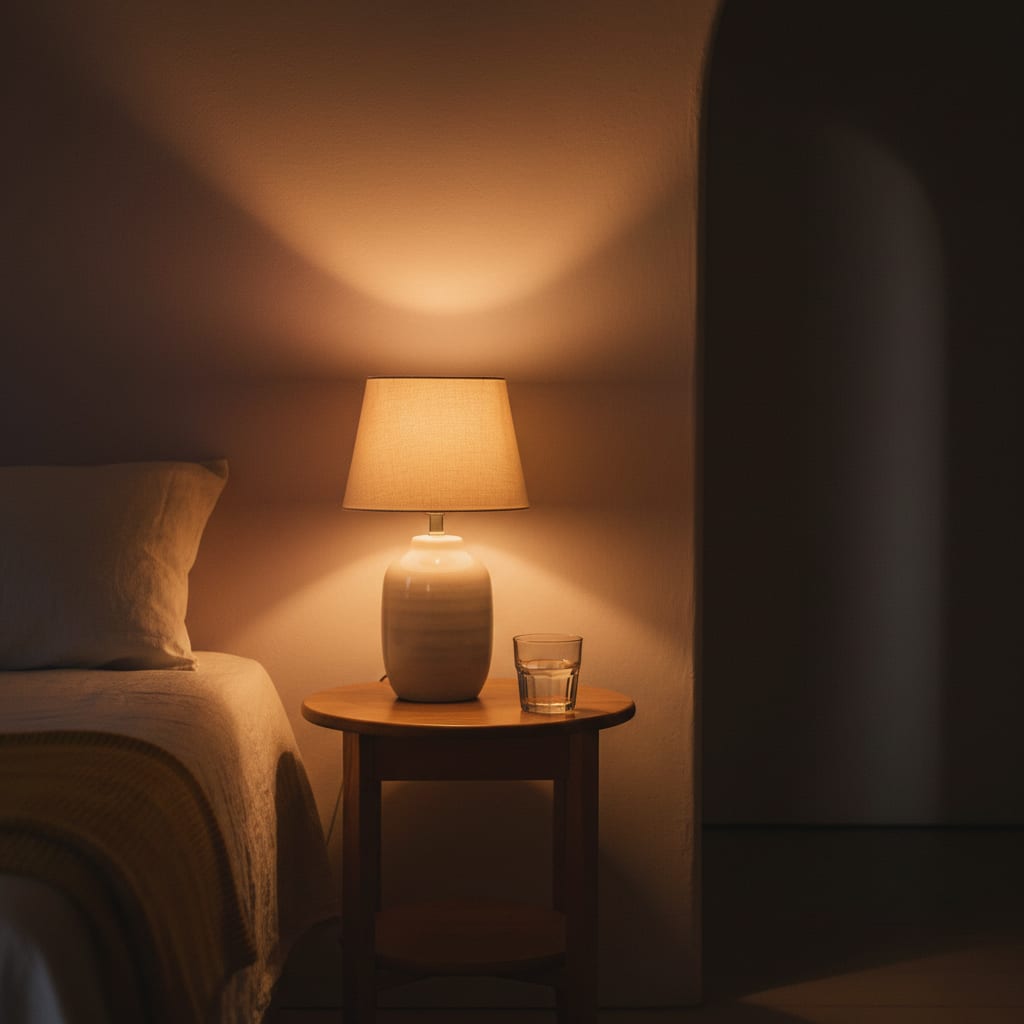
- One low, warm light you can reach without getting up. A bedside lamp on its dimmest setting, or a nightlight with a low warm option, like the Hatch Baby sound machine and night light. Enough to see the latch and the burp cloth, and no more.
- A full glass of water on the table before every feed. It gives your free hand a job.
- A folded blanket on the chair arm. Night feeds get cold.
- The baby, or nothing. The American Academy of Sleep Medicine’s healthy sleep habits page recommends “a quiet activity without a lot of light exposure” when you’re awake at night, adding: “It is especially important to not get on electronics.”
- If you need words, keep them in your ears. A podcast with the phone face down at least takes away the light. Nobody has shown it does more than that, and the Norwegian study counted audio as screen use too.
And for the phone itself, charge it across the room, not on the arm of the chair. The NHS suggests “placing your phone face down to reduce light”. If you’re logging feeds for the pediatrician, that’s five seconds of phone, not twenty minutes.
 Answer the 3am questions at 3pm
Half of night scrolling is searching "is this normal". Betteroo turns a two-minute quiz into a day-by-day sleep plan for your baby's age, so the answer is already waiting.
Take the 2-minute sleep quiz →
Answer the 3am questions at 3pm
Half of night scrolling is searching "is this normal". Betteroo turns a two-minute quiz into a day-by-day sleep plan for your baby's age, so the answer is already waiting.
Take the 2-minute sleep quiz →
Set it up before the baby comes
All of this is easier to arrange at 34 weeks than in week two.
- Pick the night-feed spot, somewhere you could safely doze, which means not the sofa. Put the lamp, the water and the blanket there, and the charger on the far side of the room.
- Agree on the wake-up rule with your partner, if you have one: who gets woken, and when. That’s part of the newborn sleep prep you’re probably doing anyway.
- Decide where the 3am questions go. Most of my first-time scrolling was searching, not entertainment. Is this nap normal? Is this much feeding normal? A sleep plan you read in daylight, like Betteroo, puts the answer in your head before the night starts. It’s a planning tool. It won’t feed anyone, and it doesn’t replace your pediatrician.
If you plan to lean on coffee the morning after, caffeine while breastfeeding covers how much and when. And for what your own body will be doing during those feeds, read postpartum recovery at 3am now, not then.
When it isn’t the phone
The NHS’s page on sleep and tiredness after having a baby is clear: “If you cannot sleep at night even when your baby is asleep or you feel tired all the time, these could be signs of postnatal depression.” If you’re scrolling because you can’t fall asleep, night after night, tell your OB, midwife or doctor. That’s a medical conversation, not a willpower problem. If you have thoughts of harming yourself or your baby, call your provider or 988 in the US straight away.
FAQ
Does night mode fix it?
It may cut some of the light. It does nothing about the time, which is where the better evidence points. A phone across the room deals with both.
Is it bad to look at my phone while breastfeeding?
A glance isn’t a crisis. The cost falls mostly on your own sleep, when a short feed turns into a long wake. Keep it brief and keep the room dim.
How long should it take to fall back asleep after a feed?
There’s no fixed number. The AASM’s general advice for any night waking: if you haven’t fallen asleep after about 20 minutes, get up and do something quiet and low-light, away from electronics. If you lie awake even when the baby sleeps, raise it with your provider.