When to Start Buying Baby Stuff (and What Can Wait)
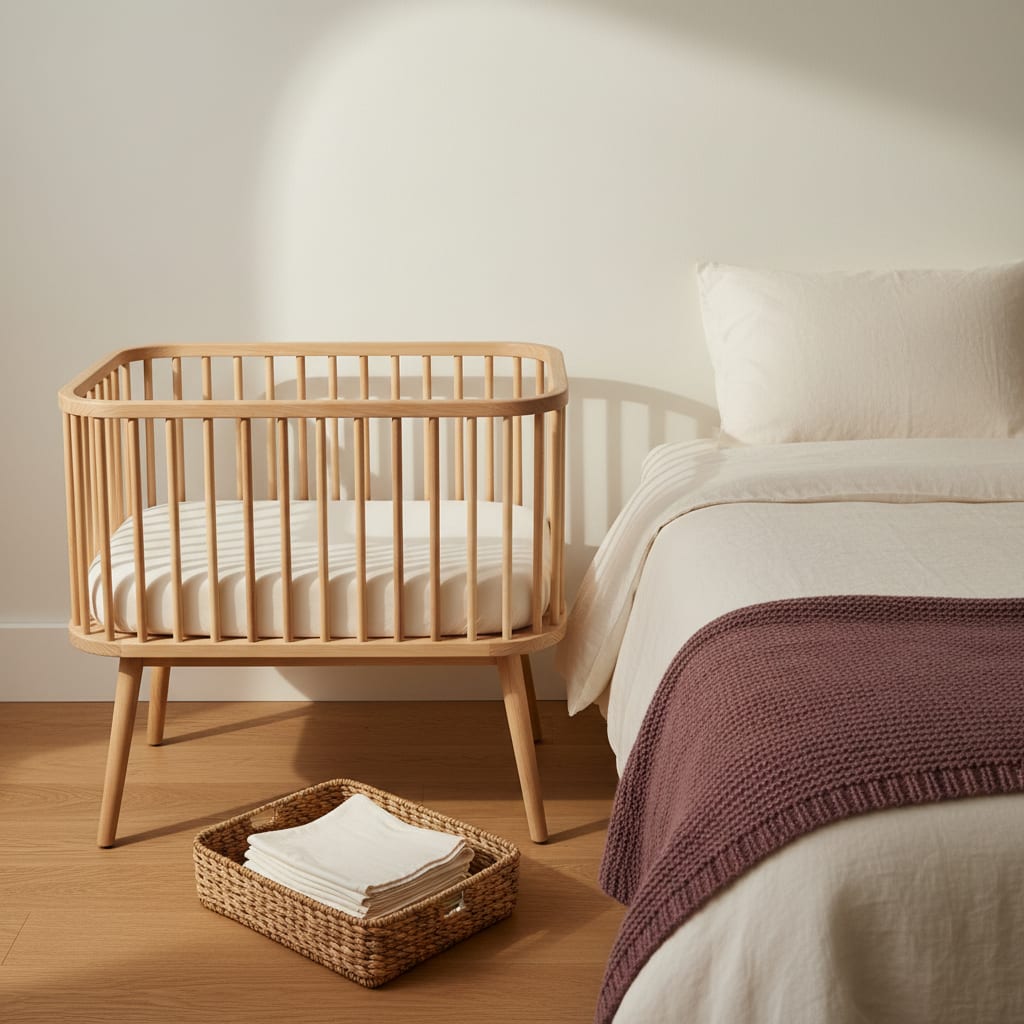
Start buying baby stuff in the second trimester, and sort it by deadline rather than by excitement. Only a few things have to exist before you leave the hospital: a rear-facing car seat installed in the car, and a safe sleep space in your room. Some things need lead time, such as a breast pump through insurance or a car seat check that books up. Everything else can wait for a shower, a sale, or the week you discover you actually need it. The AAP’s last-minute checklist puts the car seat in the preparations to finish “before your ninth month”. Work backwards from that date.
Where this post stops
I’m pregnant with my second, and this is about when, not what. I won’t give you a shopping list. Only Mom Reviews has a minimalist baby registry checklist for that. This post is the calendar to put it on.
Sort by deadline, not by aisle
Every baby item falls into one of three groups:
- Must exist before discharge. You literally can’t go home without it, or the baby needs it the first night.
- Needs lead time. It’s simple to own but slow to arrange: an order, an approval or an appointment.
- Can wait. It’s needed weeks or months after the birth, or only if it turns out you need it.
Most early panic-buying is group 3 bought in the first trimester. Most late panic is group 1 left until 38 weeks.
Group 1: before you leave the hospital
A rear-facing car seat, installed. The AAP’s guide to bringing baby home says staff will ask whether you have one installed, and “all U.S. hospitals check to make sure you have one.” Its last-minute activities list asks for a seat “approved for use by a baby at typical newborn weights”. Because the seat needs installing and checking, it is the most time-sensitive purchase on the list. My post on when to install the car seat has the timeline.
A safe place to sleep, in your room. The AAP’s guide to safe sleep recommends sharing a room with your baby “for at least the first 6 months of life”, in a crib, bassinet, portable crib or play yard that meets CPSC safety standards. Two things follow for timing:
- The sleep space has to be ready before the birth.
- A fully kitted-out nursery in another room doesn’t. A separate nursery is a later-months project, not a third-trimester deadline.
If money is the problem, the AAP’s bringing-home guide says some hospitals “offer temporary sleeping solutions or can connect you with resources”, so ask before the birth. Setting up the sleep space covers the room itself.
Something to wear home. The AAP’s checklist includes “a receiving blanket and clothes for the baby to wear home”. A few newborn-size basics, bought in the third trimester, are plenty. Sizes run small fast, and gifts tend to be clothes.
Group 2: things that need lead time
A breast pump through insurance. If you plan to breastfeed, the AAP suggests finding out “if you can order an electric breast pump in advance”, because “some insurance companies will allow this”. Ask your insurer in the second trimester, when there’s time for the paperwork.
The car seat check. The seat itself is in group 1, but the check sits here because it books up. The Virginia Department of Health’s safety seat checks page suggests booking “1 to 2 months before your due date”.
Anything that ships slowly or needs assembling. A crib or bassinet can arrive in pieces and take an evening and two people to build. Set yourself a deadline of about 34 weeks for anything that needs building. That gives you a margin if the baby is early.
If you’re having a shower. Hold off on the big items until after it, so you aren’t buying something twice. Leave enough time between the shower and your due date to fill the gaps.
Group 3: what can wait
- Anything for older babies. Gear for a crawler, a sitter or an eater is for a stage months away. It can wait until you can see that stage coming.
- Most clothes beyond the first size. You’ll know your baby’s size, the season and what you were given.
- Problem-solvers. Products that fix a specific newborn difficulty are worth buying only once you know your baby has that difficulty.
- Duplicates. Second sets of anything, for a second floor or a second car, can wait until you know the first one earns its keep.
For yourself, maternity clothes run on their own timeline. That one’s in when nothing fits.
By trimester, roughly
- First trimester: buy nothing baby-related unless you want to. Research and save.
- Second trimester: make the big decisions (car seat, sleep space, stroller if you want one), build the registry, ask the insurer about a pump.
- Early third trimester: buy and install the car seat, then book the check. Build the sleep space.
- By about 36 weeks: car seat checked, sleep space in your room, going-home outfit packed. Stop there.
Second time round: shop your own house first
The biggest saving in a second pregnancy is the stuff in the attic. Two items need checking before you count them:
- The old car seat. The AAP’s car seat guidance says to check the label for the date it was made and ask the manufacturer how long it should be used. Don’t use a seat that was in a moderate or severe crash, has missing parts or labels, or has been recalled. Big Family Playbook explains how to read the date in car seat expiration.
- The old crib or bassinet. The AAP’s safe-sleep guide says to check the CPSC site for recalls “especially if it’s not new”, and not to use a crib “that doesn’t have instructions, is missing hardware or that’s broken”. The mattress must fit tightly.
Then work out what the toddler still needs. If they’re still in the crib, the baby needs a sleep space of their own. That question gets its own post in preparing for two under two.
FAQ
When should I start buying baby stuff?
The second trimester is a sensible start for the big decisions. Only the car seat and a safe sleep space are true deadlines, and the AAP puts the car seat in the preparations to finish before your ninth month.
What do I need before the baby comes home?
A rear-facing car seat, installed (US hospitals check), a safe sleep space in your room that meets CPSC standards, and something for the baby to wear home. Most other things can wait.
Is it bad luck to buy baby things early?
That’s a personal call, not a safety one. If it worries you, research and register early, and set the purchases for later.
Can I reuse baby gear from my first child?
Often, yes, once you’ve checked it. The AAP says to check a car seat’s manufacture date, crash history, parts and recalls, and to check a crib for recalls and missing hardware before using it again.