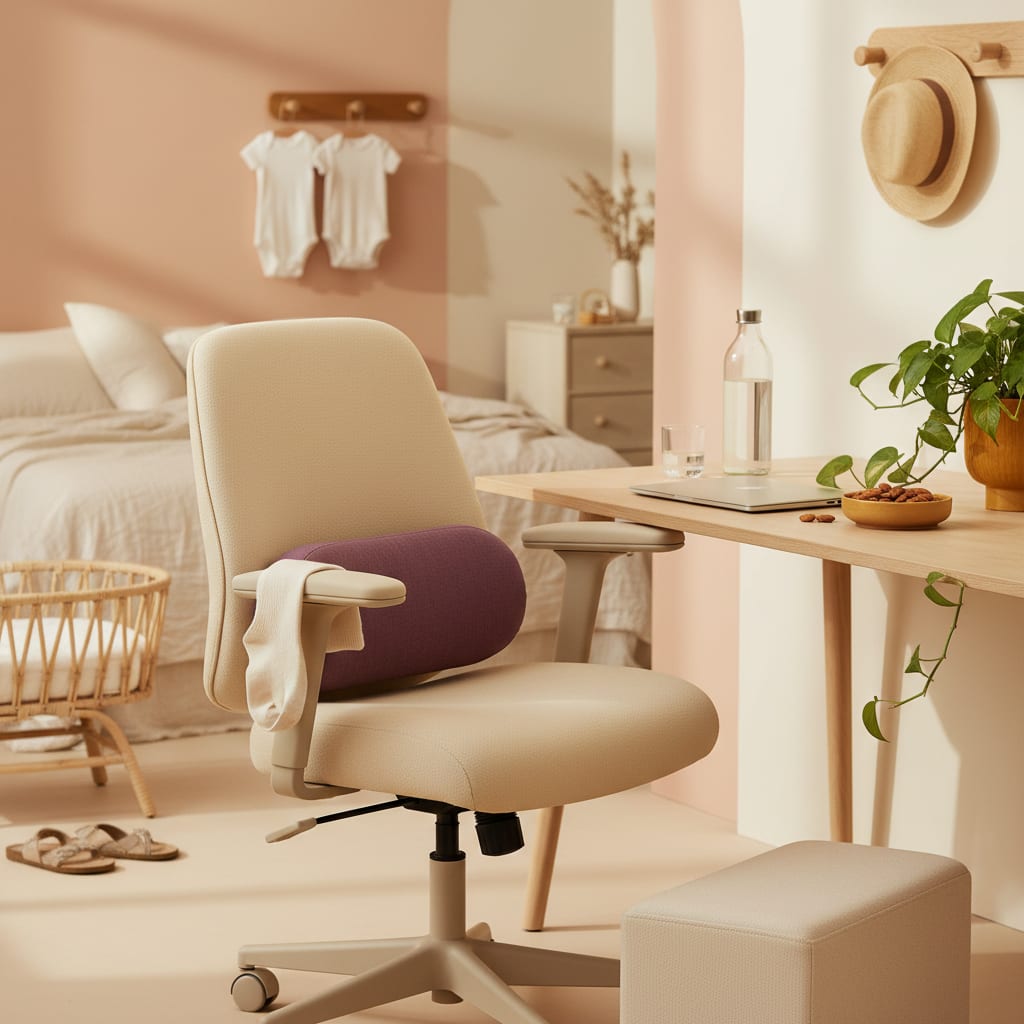
10 Things Second-Time Moms Do Differently

The short list of what second-time moms do differently while pregnant: buy roughly a third as much, start comfort measures months earlier, do one real prep project instead of nine decorative ones, book help before the birth rather than after, ignore the week-by-week apps, and say no to things without a paragraph of explanation. Almost none of it is wisdom. It’s just that round one taught us where the effort was wasted, and round two has no spare effort to waste. Here’s my actual list, from the middle of this pregnancy, with the reasoning attached.
Gear and shopping: the shorter list
1. I’m buying about a third of what I bought the first time. The first registry was an anxiety document — every item was a small promise that I’d be ready. What we actually used in month one fit on one shelf. This time I’m buying the consumables, replacing what wore out, and leaving the rest until the baby exists and has opinions. If you’re doing the list properly, Only Mom Reviews has done the research on what earns its place in their minimalist baby registry checklist — verdicts are their department, not mine.
2. I’m buying for me, not for the nursery. First pregnancy: a mobile, a themed hamper, coordinated everything. This pregnancy: the things that make being pregnant and then being awake at 3am survivable. A good water bottle, like the Owala FreeSip. Slip-on shoes. The pillow situation, sorted early — I wrote the whole third-trimester sleep setup after learning the hard way that you can’t build it at 2am while crying.
3. I’m checking what’s already in the attic before buying anything. Obvious. Skipped entirely last time, because I didn’t have an attic full of my own baby’s things. Half an hour of inventory has saved more money than any sale I’ve ever caught.
Prep: fewer projects, better ones
4. One deep project instead of a craft schedule. Last time the “preparation” was mostly decorative — folding and refolding, a name spreadsheet, a nursery I finished in month six and then barely used. This time there’s exactly one flagship project: setting up newborn sleep before the baby comes. Space, expectations, night-shift plan, tools. It’s the only prep that reliably pays out in the first two weeks, and it’s a sitting-down job, which matters more than it should.
5. I’m doing the boring admin early, when I can still think. Pediatrician chosen and called, insurance questions asked, the paperwork sequence understood. All of it is dull, all of it is easier at 24 weeks than at 39, and none of it is the thing you feel like doing on a Saturday.
6. Comfort measures start months before they feel necessary. The compression socks, the shoes, the sitting-down rules, the sleep fort — I started all of them in the second trimester this time, because the aches turn up earlier in round two and because there’s a toddler making the whole thing more physical.
7. Help is booked, not hoped for. The first time I assumed help would materialize, then spent the newborn weeks unable to name a single specific thing anyone could do. This time the asks are concrete and pre-agreed: who takes the toddler on which days, who’s on call for the hospital gap, who does one grocery run a week for a month. Vague offers are lovely and useless; a named person with a named day is a plan.
Expectations and boundaries
8. I’ve deleted the week-by-week fruit app. It was genuinely delightful the first time and I’d tell a first-timer to enjoy it. Round two, the same notifications read as a performance review I didn’t sign up for. I know roughly what week it is. The baby is the size of a baby.
9. I say no in one sentence. No explanation, no apology paragraph, no offer of an alternative date. “We’re not doing that this time” is a complete sentence, and the version of me who wrote three-paragraph texts declining a weekend away at 34 weeks was spending energy she needed for stairs.
10. I’ve stopped treating my own experience as the forecast. This is the one that surprises second-timers most. Everything I “know” is a sample of one: my first was an easy sleeper, which told me nothing about this baby, and being smug about it in advance is how you get humbled in February. Meanwhile the toddler side of the equation is its own project — balancing a toddler and a pregnancy is genuinely the biggest difference between round one and round two, and no amount of gear helps with it.
What I’m not doing differently
Worth saying, because “second time” gets used as a license for skipping things it shouldn’t:
- The prenatal appointments. Full schedule, same as a first-timer. The monitoring isn’t calibrated to your experience level; it’s for this pregnancy, which has its own file.
- Reporting symptoms. “It wasn’t like this with my first” is a sentence to say to your provider, not a reason to wait a week. Second-time confidence belongs in the wardrobe.
- The safe-sleep setup. Guidance changes, and what was standard when your first was born may not be current. Rebuild it from the current advice rather than from memory.
- Taking the pregnancy seriously as an event. Fewer photos is fine. Treating it as an administrative footnote isn’t — and if it’s stinging that nobody’s asking, say so out loud to the people close to you.
Call your OB or midwife if…
The flags are identical in round two: bleeding, fluid leaking, contractions before term, severe headache or vision changes, sudden swelling of the face or hands, fever, pain with urination, severe or one-sided pain, dizziness or fainting, or reduced movement once your baby has a rhythm. Two second-timer specials: don’t self-diagnose by comparison with last time, and make sure anything from your first pregnancy’s history is actually in the conversation — providers plan around it, but only if they know.
FAQ: doing it differently the second time
What do second-time moms actually skip buying?
Most of the decorative and duplicate categories: the second changing station, the themed nursery textiles, the full wardrobe in newborn size, the gadgets bought to solve a problem you haven’t met yet. What people rarely regret buying is anything that makes the adult’s night easier.
When should I start preparing for a second baby?
Earlier than felt necessary the first time, and in the second trimester rather than the third — not because there’s more to do, but because you have less usable time and energy per week. Front-load anything that requires standing, lifting, or clear thinking.
Is a second pregnancy really easier?
Different, not uniformly easier. Less anxiety and better instincts, more aches earlier, and a fraction of the rest. Plenty of people find round two smoother overall; plenty find it harder. Both are common enough that neither should worry you.
Do I need a new car seat and crib for the second baby?
Safety gear has expiry dates, recall histories and changing standards, so that’s a check-the-specifics question rather than a reuse-by-default one — and the current guidance, not your memory of it, is the reference. Gear verdicts are Only Mom Reviews’ beat; my only rule is that I don’t guess on anything the baby sleeps in or rides in.